

1. Product Overview
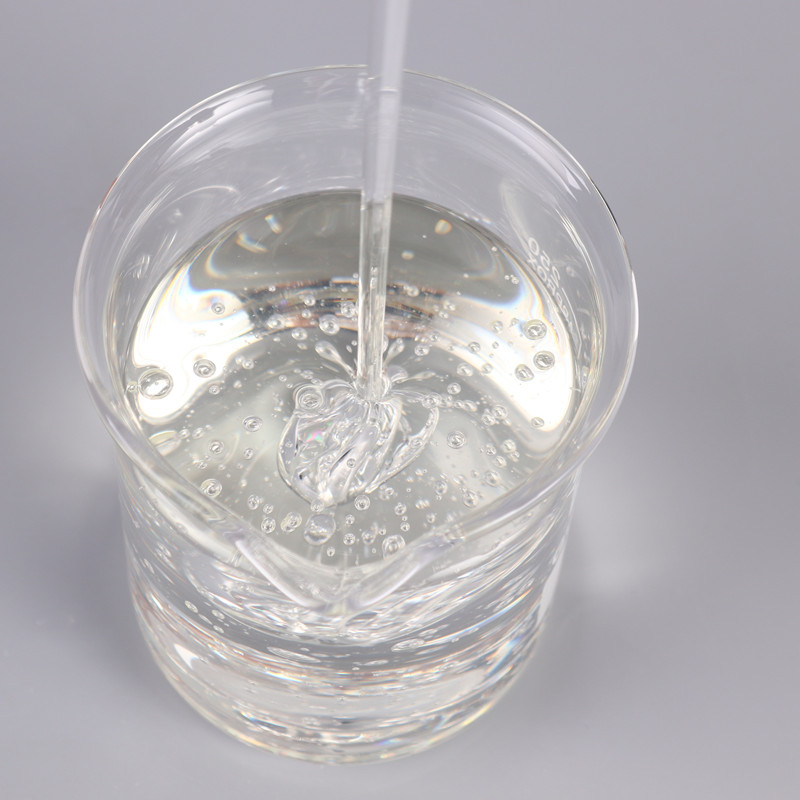
Dimethyl Silicone Oil (chemical name: Polydimethylsiloxane, CAS No. 9006-65-9, 9016-00-6, or 63148-62-9) is a linear polymer compound formed by the polymerization of dimethylsiloxane. The product appears as a colorless, transparent oily liquid, odorless or nearly odorless, and tasteless. It is soluble in chloroform, ether, benzene, toluene, and other organic solvents, but insoluble in water or ethanol.
Dimethyl Silicone Oil is available in a complete product range from low viscosity (approximately 10cSt) to high viscosity (up to 2,000,000cSt), from free-flowing liquids to thick semi-solid materials. Its molecular structure provides physiological inertness, chemical inertness, and good thermal stability, allowing for long-term use within a temperature range of -50°C to 200°C.
2. Typical Technical Specifications
Different viscosity grades of dimethyl silicone oil have different specifications. The following table provides typical parameters for common grades:
| Grade | Appearance | Viscosity (25°C, mm²/s) | Refractive Index (25°C) | Flash Point (°C) | Specific Gravity (25°C) |
|---|---|---|---|---|---|
| 201-10 | Colorless transparent liquid | 10±2 | 1.399 | 155 | 0.930–0.940 |
| 201-20 | Colorless transparent liquid | 20±2 | 1.400 | 250 | 0.945–0.955 |
| 201-50 | Colorless transparent liquid | 50±5 | 1.401 | 270 | 0.950–0.960 |
| 201-100 | Colorless transparent liquid | 100±8 | 1.402 | 300 | 0.960–0.970 |
| 201-350 | Colorless transparent liquid | 350±8 | 1.403 | 300 | 0.965–0.974 |
| 201-500 | Colorless transparent liquid | 500±25 | 1.403 | 300 | 0.965–0.975 |
| 201-1000 | Colorless transparent liquid | 1000±50 | 1.404 | 300 | 0.965–0.976 |
Note: The above data represent typical technical specifications. Values may vary by grade and batch. Please refer to the product test report for specific parameters. Additional grades including 5000cSt, 10000cSt, and 50,000 to 2,000,000cSt are also available.
3. Key Performance Characteristics
3.1 High and Low Temperature Resistance
The molecular structure of dimethyl silicone oil determines its stable performance across a wide temperature range. Its freezing point can reach as low as -50°C to -60°C, with flash points exceeding 300°C. It can be used long-term within the temperature range of -50°C to 200°C. This characteristic makes it suitable for applications with significant temperature variations.
3.2 Chemical Stability
Dimethyl Silicone Oil exhibits chemical inertness and does not react with acids, alkalis, or other chemicals under normal conditions. It also maintains stable performance under ultraviolet light, oxygen, and ozone exposure. However, it should be noted that contact with concentrated strong acids, strong alkalis, or Lewis acids may cause degradation or crosslinking, with the reaction becoming more pronounced at higher temperatures.
3.3 Electrical Insulation Properties
Dimethyl Silicone Oil has good electrical insulation properties, including arc resistance and corona resistance. It can be used as an insulating medium in motors, electrical equipment, and electronic instruments, as well as in transformer oils and capacitor oils.
3.4 Surface Properties
Dimethyl Silicone Oil has a low surface tension (approximately 21.5 mN/m), providing good water repellency and mold release performance. It has a low viscosity-temperature coefficient, high compressibility, and also possesses some shear resistance.
3.5 Physiological Inertness
Dimethyl Silicone Oil is non-toxic, odorless, and physiologically inert. It is not decomposed by body fluids, which supports its application in the medical and health fields. However, specifications should be selected according to the standards applicable to the specific use.
4. Main Application Areas
4.1 Mechanical, Electrical, and Electronics Industries
Dimethyl Silicone Oil is used as an insulating medium in motors, electrical equipment, and electronic instruments for high-temperature resistance, arc resistance, moisture protection, and dust prevention. It is also used in transformer oils, capacitor oils, and as liquid damping and vibration-damping materials in precision instruments.
4.2 Mechanical Industry
In the mechanical field, dimethyl silicone oil can be used as a lubricating oil, cutting fluid, liquid spring fluid, buffer oil, and brake fluid. It is suitable for lubricating rubber and plastic bearings and gears.
4.3 Mold Release and Forming Processing
Dimethyl Silicone Oil is used as a mold release agent in the plastic molding, rubber processing, metal casting, papermaking, and glass products industries. It provides good release performance, high surface precision of finished products, low consumption, and can be used for multiple releases after a single application.
4.4 Defoamer
With low surface tension, insolubility in water and most vegetable and mineral oils, and good chemical stability, dimethyl silicone oil is a widely used type of defoamer. In industries such as petroleum, chemicals, printing and dyeing, coatings, pharmaceuticals, fermentation, and food, defoaming effects can be achieved with the addition of 10–100ppm of silicone oil.
4.5 Textile and Leather Industries
In the textile and apparel industries, dimethyl silicone oil is used as a softener, water repellent, hand-feel modifier, and sewing thread lubricant.
4.6 Daily Chemicals and Personal Care
Dimethyl Silicone Oil is used as an additive in cosmetic formulations such as skin creams, body washes, and shampoos to provide softening effects and a silky feel.
4.7 Surface Treatment and Additives
Applying a 2%–10% solution of dimethyl silicone oil onto glass, ceramic, or metal surfaces, followed by heat treatment at 150–300°C, can form a waterproof, dustproof, and insulating film. Adding a small amount of silicone oil to coatings, rubber, paraffin, resins, and other materials helps improve water resistance, glossiness, and processing performance.
5. Usage Recommendations and Considerations
5.1 Viscosity Selection
Different applications require different viscosity grades:
| Application Scenario | Recommended Viscosity Range | Notes |
|---|---|---|
| Mechanical Lubrication, Hydraulic Oil | Low viscosity (50–500cSt) | Good fluidity, suitable for lubrication and heat dissipation |
| Mold Release Agent | Medium viscosity (500–5000cSt) | Balances coating properties and release effect |
| Defoamer | High viscosity (10,000cSt and above) | Stronger defoaming power |
| Insulating Medium, Damping Oil | Select according to specific equipment requirements | Must match process parameters |
It is recommended to select the appropriate viscosity grade based on specific operating conditions.
5.2 Product Purity
High-purity dimethyl silicone oil contains fewer impurities and offers more stable performance. Products with a purity of 99% or higher typically meet most application requirements. In high-temperature environments, the presence of impurities may affect product stability.
5.3 Use Environment
Dimethyl Silicone Oil is chemically stable under normal conditions. However, contact with concentrated strong acids, strong alkalis, or Lewis acids may cause degradation, with the reaction becoming more pronounced at higher temperatures. Contact with incompatible substances should be avoided during use.
5.4 Storage Conditions
The product should be stored in sealed containers in a cool, dry, ventilated, and light-protected area, protected from rain and direct sunlight. The general shelf life is three years. After opening, containers should be sealed properly to prevent moisture absorption.
5.5 Safety and Handling
Dimethyl Silicone Oil itself is of low toxicity, but some grades may cause eye irritation. It is recommended to wear protective goggles during handling, avoid inhaling mists, and thoroughly wash skin after use. In case of eye contact, rinse carefully with water and seek medical attention promptly.
6. How to Choose Dimethyl Silicone Oil Products?
When selecting dimethyl silicone oil products, consider the following aspects:
1. Viscosity Grade
Select the appropriate viscosity based on the specific application scenario. Different industries and uses have different viscosity requirements.
2. Product Purity
High-purity products contain fewer impurities and offer more stable performance. Request product test reports from suppliers.
3. Chemical Stability
Quality products should maintain stable performance in the intended use environment without easy decomposition or degradation.
4. Application Matching
Different application fields have different quality requirements for dimethyl silicone oil. Select the appropriate grade based on the intended use.
5. Supplier Qualifications
Choose suppliers that can provide product test reports, stable supply capability, and technical support.
7. About Shenyang Xingzhenghe Chemical
Shenyang Xingzhenghe Chemical Co., Ltd. (www.xzhch.com) is a supplier specializing in concrete admixtures and construction chemical raw materials, established in 2009. The company's product range includes dimethyl silicone oil, polycarboxylate superplasticizers, sodium gluconate, lignosulfonate series, Hydroxypropyl Methyl Cellulose, and redispersible polymer powder.
The company has experience in the supply of dimethyl silicone oil products, serving applications including mechanical lubrication, electrical insulation, mold release, defoaming, and daily chemicals, with distribution across domestic regions and international markets.
8. Conclusion
Dimethyl Silicone Oil, as a relatively stable organosilicon polymer material, has wide applications in electrical insulation, mechanical lubrication, mold release and forming, defoaming, textile finishing, and daily chemical care. When selecting dimethyl silicone oil products, factors such as viscosity grade, product purity, use environment, and supplier capabilities may be considered.
Shenyang Xingzhenghe Chemical Co., Ltd. is committed to providing dimethyl silicone oil and related chemical raw material solutions to its customers.
Contact Us:
Company: Shenyang Xingzhenghe Chemical Co., Ltd.
Website: www.xzhch.com
Phone: +86 13889850231
Email: sales01@xzhch.com
Address: No. 33, Nan'er Road, Heping District, Shenyang, China